


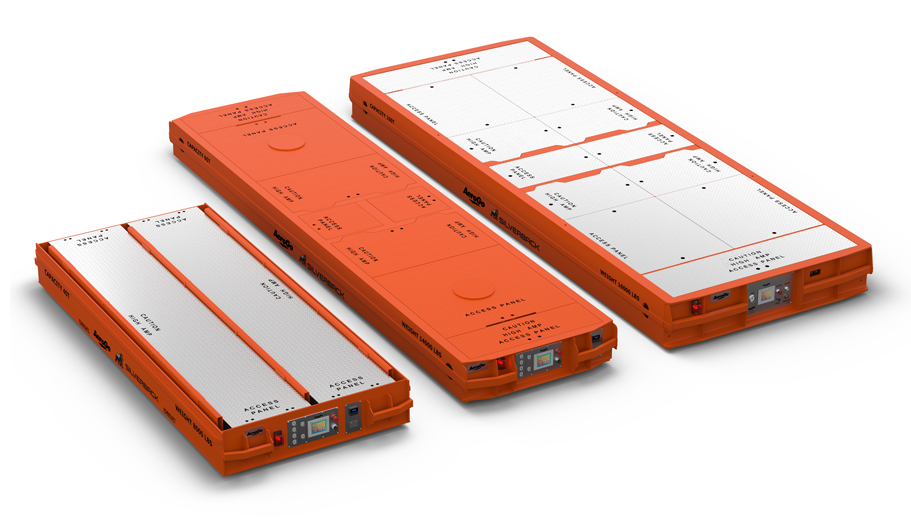
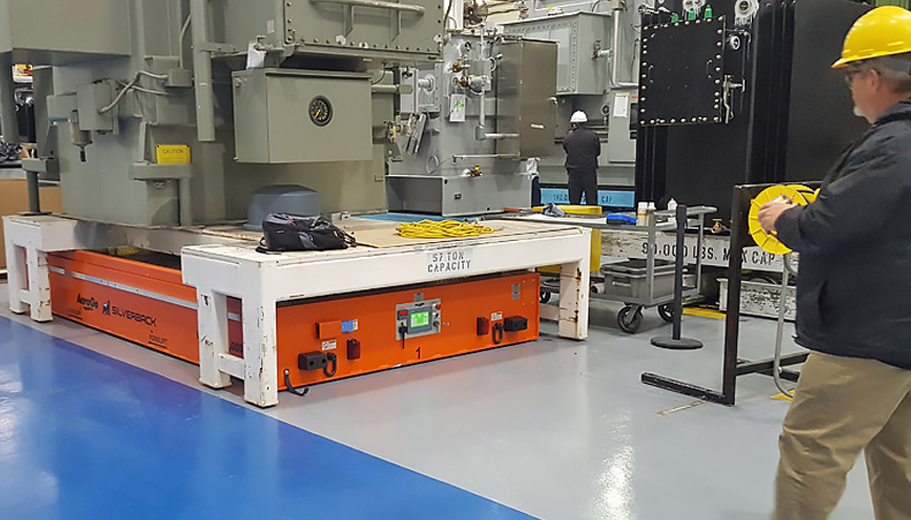
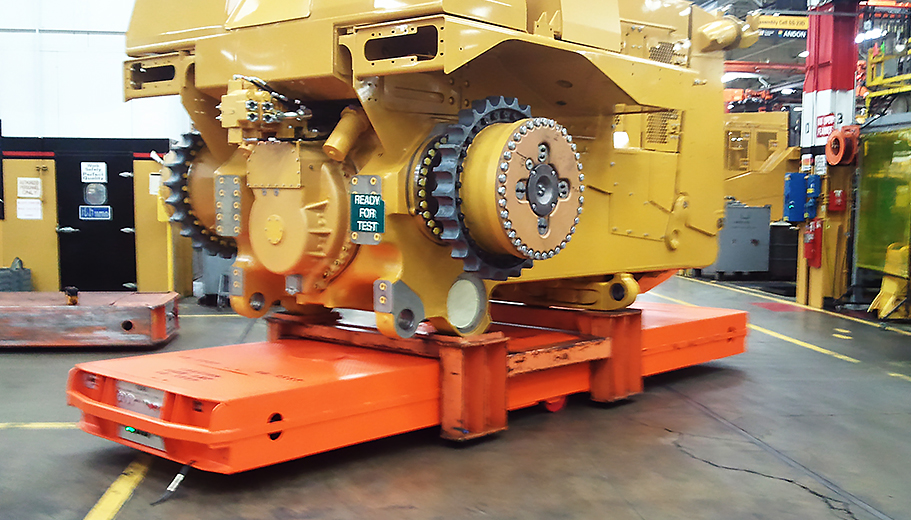
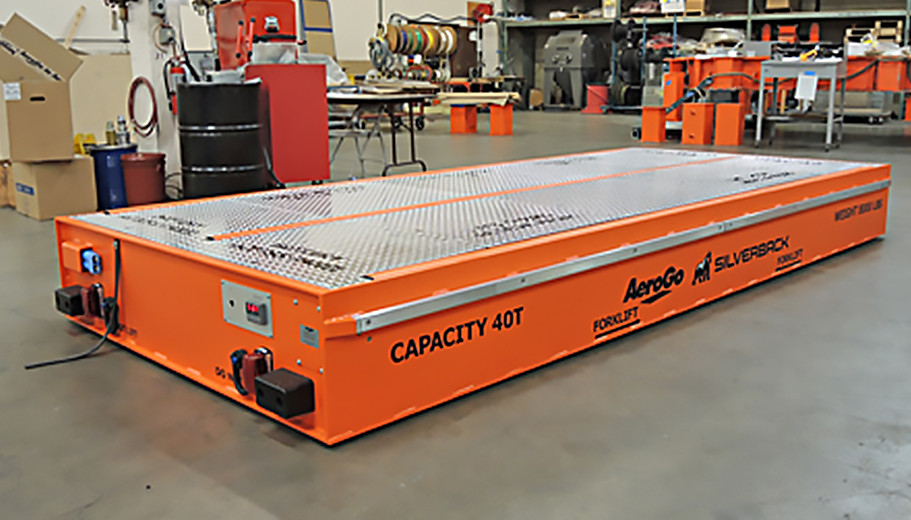
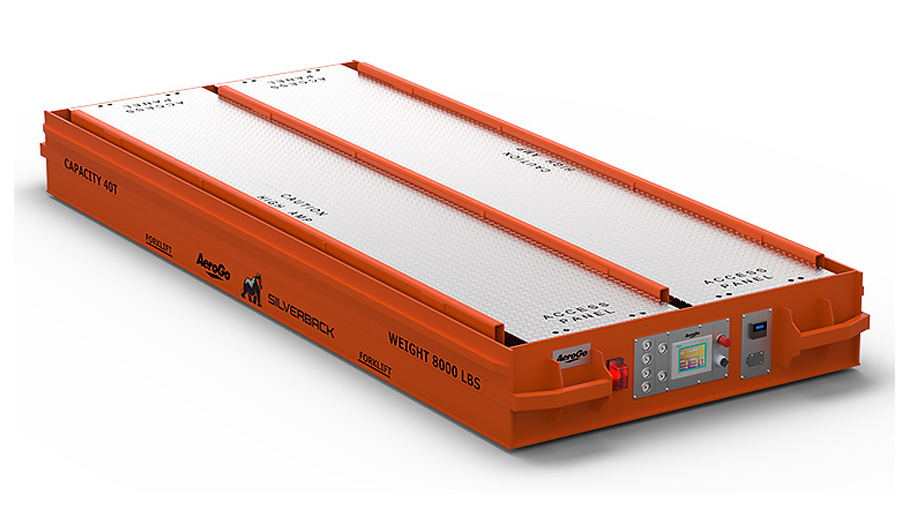
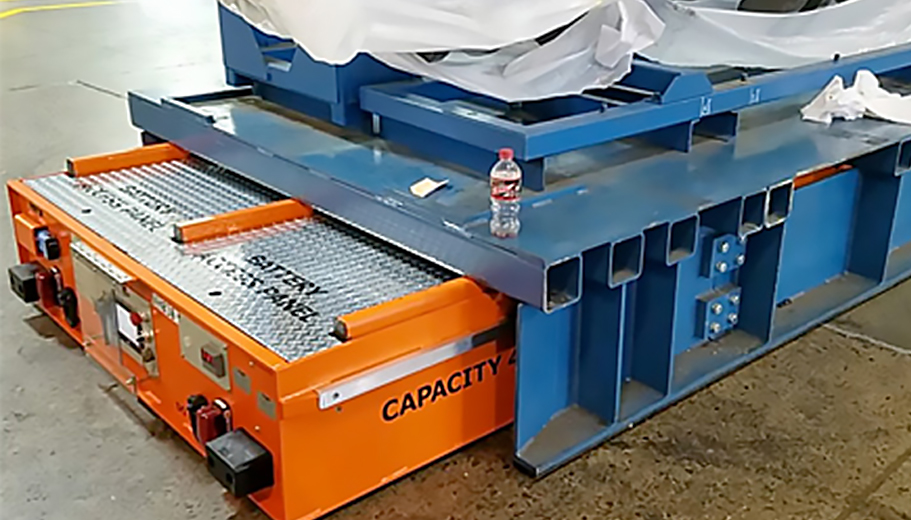
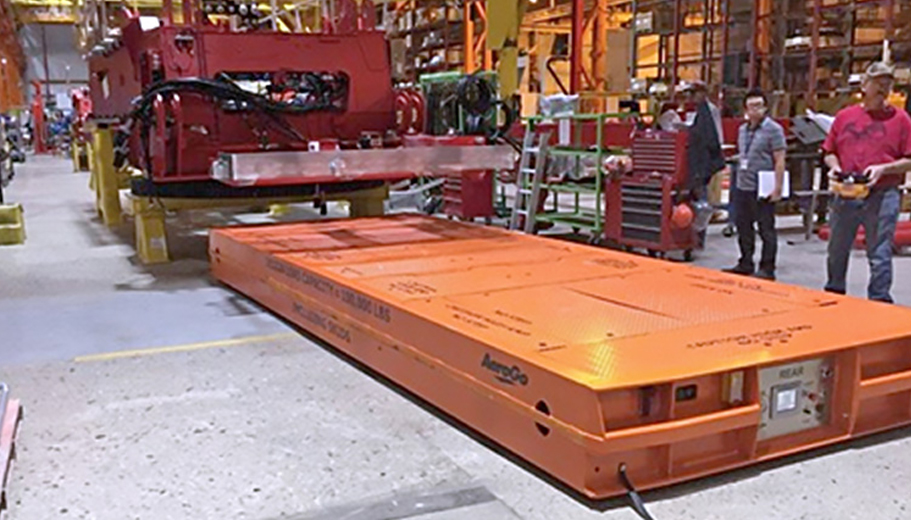
- Eliminates first-in/first-out, or fixed move paths
- Minimal operational footprint maximizes usable floor space
- Integrated lift system provides self-loading capability
- Self-loading capability makes it possible to share the transfer cart with multiple payloads
-
Rotates within its own footprint unlike cranes, forklifts or other convention vehicles
Specifications
Standard
| Model Number | Maximum Capacity (lbs) | Standard Width (ft) | Standard Length (ft) | Standard Height (in) |
|---|---|---|---|---|
| WV-E40T | 80000 | 5.9 | 14.1 | 17 |
| WV-H65T | 130000 | 4.9 | 20 | 18 |
Metric
| Model Number | Maximum Capacity (mt) | Standard Width (m) | Standard Length (m) | Standard Height (mm) |
|---|---|---|---|---|
| WV-E40T | 36 | 1.8 | 4.3 | 432 |
| WV-H65T | 59 | 1.5 | 6.1 | 458 |
Industrial Transfer Carts
At AeroGo, we value providing our clients with the best possible solution for safely moving heavy loads. Our industrial transfer carts are ideal for moving heavy loads from station to station in a factory environment with exceptional efficiency and safety. Heavy load transfer carts are cordless, remote-guided vehicles. Industrial transfer carts are designed to help eliminate or reduce the need for equipment such as forklifts and overhead cranes to move heavy loads.
Applications and Industries
We offer top-tier industrial transfer carts that are ideal for multiple applications and industries. Our team of experts is dedicated to assisting you in finding the right solution for your application.
Applications for heavy load transfer carts include:
- Assembly line transporting
- Moving heavy machinery in factories or warehouses
Our solutions are ideal for industries such as:
Advantages of AeroGo Industrial Transfer Carts
At AeroGo, we understand the requirements of an industrial manufacturer. That is why we offer transfer carts with a dedication to as many advantages as possible.
- Rotates within its own footprint unlike cranes, forklifts, or other conventional vehicles.
- Transfer loads up to 200,000 lbs.
- Eliminates first in/first out (fixed move paths).
- Minimal operational footprint that maximizes usable floor space.
- Because the cart fits in its own footprint, it can be used in conjunction with cranes (to get to spaces the crane can’t reach) and can go where forklifts don’t fit because their counterweight extends beyond the size of the load.
- Because the cart is battery operated, it can drive any path or in and out of areas compared to a rail move (tied to the rail line) or other fixed-path methods.
- Integrated lift system provides self-loading capability.
- Self-loading capability makes it possible to share the transfer cart with multiple payloads.
- Self-loading.
- No lifting required.
We are ISO 9001:205 certified #FM588888.
Product Manuals
Get the White Paper
Learn how self-propelled carts enable lean manufacturing.
The Problem Solver

Transfer Cart FAQs
When should I use a Wheeled Vehicle? (Also known as a Transporter or Transfer Cart)
Wheeled Vehicles are ideal when you need to move heavy loads over longer distances, follow defined travel paths, or operate in environments where floors aren’t suitable for air casters. They’re commonly used in manufacturing, assembly lines, and facilities where repeatable, controlled heavy movement is important.
What floor or path conditions are required?
Wheeled Vehicles are designed to operate on a wider range of surfaces than air casters, including standard industrial concrete floors. While smoother, well-maintained surfaces will always improve performance, transporters can handle minor imperfections, expansion joints, and longer travel routes more effectively.
What is the minimum aisle width and turning/rotation clearance for each model?
Clearance requirements depend on the size of the Wheeled Vehicle, load dimensions, and steering configuration. Some models are designed for tight spaces and can rotate within their own footprint, while others require more room for turning. AeroGo works with customers to define exact requirements based on the specific application and layout.
What battery capacities are available, and what runtime at rated load and recharge times can I expect?
Runtime will vary based on load weight, travel distance, and frequency of use, but systems are typically designed to support a full shift or more on a single charge. Recharge times depend on battery type and charger configuration, with options available to minimize downtime.
What safety features are standard or available?
Safety is a core part of Wheeled Vehicle design. Common features include emergency stop controls, load stability management, flashing lights and audible sounds. Custom safety integrations can be added based on operational requirements.
What are the control options?
Wheeled Vehicle controls are typically remote pendant controls or radio remote controls. This flexbility allows operators to choose the level of control and visibility that best fits their workflow.
Our Partners